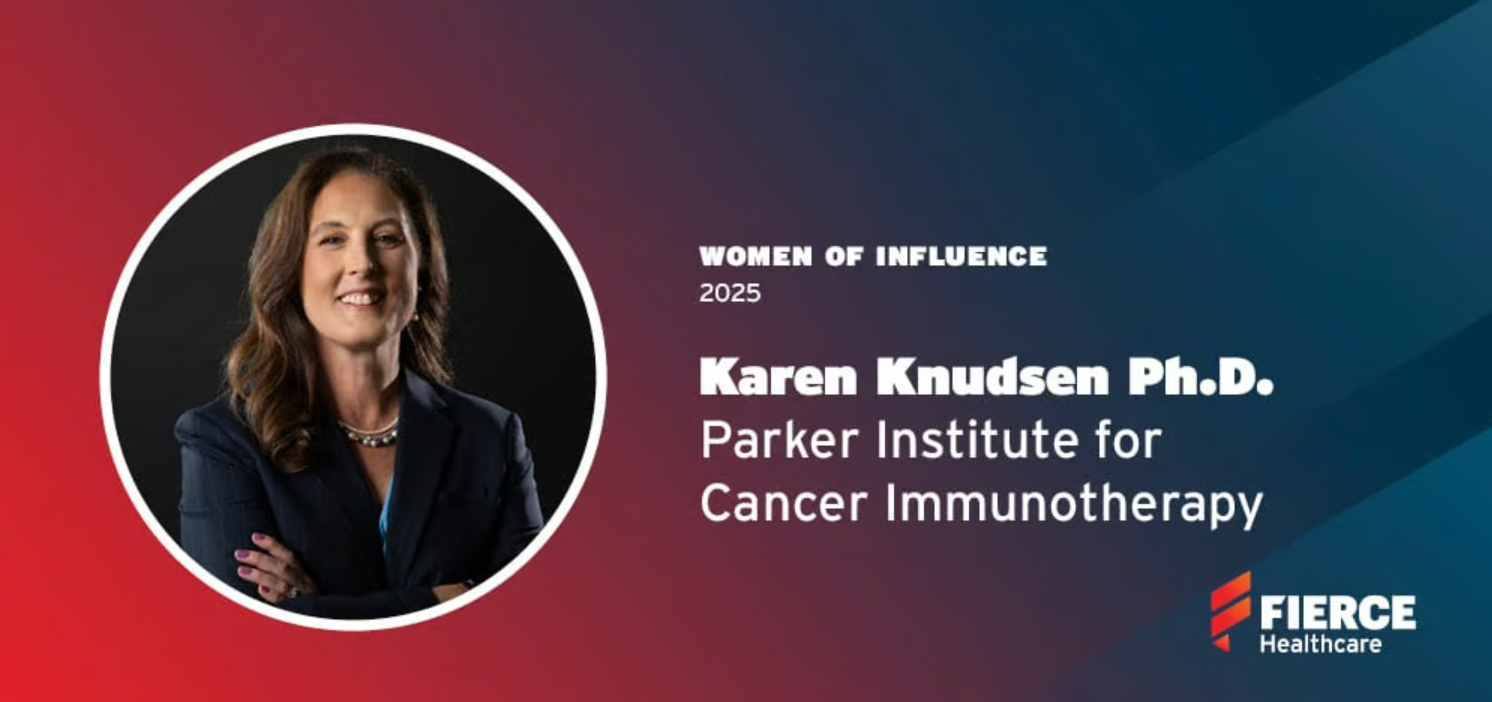
Karen Knudsen is leading the charge in the fight against cancer
CEO of the Parker Institute for Cancer Immunotherapy
Education: Bachelor of science in biology from The George Washington University; master of business administration from Fox School of Business at Temple University; Ph.D. in molecular biology from the University of California, San Diego
About her: Karen Knudsen is a globally recognized expert in prostate cancer and a visionary leader in oncology, healthcare delivery, nonprofit innovation and strategic transformation. According to her peers, she’s the rare leader who understands the science and also what it takes to advance scientific breakthroughs to clinical reality.
During her tenure as CEO of the American Cancer Society (ACS) and the ACS Cancer Action Network, Knudsen led both organizations through a period of transformative growth, significantly expanding research investments, advocacy reach and direct patient support initiatives. Under her leadership, the ACS increased revenue by more than 30%, broadened its impact to serve over 55 million lives annually and developed and scaled innovative new programs to accelerate progress against cancer.
Knudsen was appointed CEO of the Parker Institute for Cancer Immunotherapy (PICI) in March of this year to help expand the reach of the institute’s impact and bring the vision of turning all cancers into curable diseases to reality. The PICI unites leading researchers, clinicians and data experts from the world’s premier academic and medical institutions into a radically collaborative network. As the leader of the organization, she currently oversees the support of more than 1,000 investigators, 500 research projects and trials and 17 portfolio companies that have collectively raised more than $4 billion. In June, Knudsen was honored with the Allen Lichter Visionary Leader Award from the American Society of Clinical Oncology to recognize her lifetime achievement of outstanding contributions to the field of oncology.
Knudsen's peers say she is driven by a combination of vision and relentless focus on patient outcomes. Her background in biotech, scientific, healthcare and nonprofit leadership uniquely equips her to strengthen the PICI’s leadership in oncology, foster major industry collaborations and accelerate the institute’s model of venture incubation and investment. Beyond her organizational role, Knudsen is dedicated to participating in national and international forums and shaping policies and strategies that aim to increase collaboration, accelerate innovative solutions for patients and eliminate cancer disparities. In just the past two months, she has spoken at 10 different events across nine states and the United Arab Emirates, addressing topics from AI in cancer care, to the case for urgent reform in the clinical trial ecosystem, and the current state of funding in life sciences. Outside of the PICI, Karen also serves on the board of directors for AstraZeneca, contributing to global R&D strategy and responsible corporate leadership. She is also: board director for Paradigm Health, ExaiBio and Research!America; board advisor for ArteraAI; strategic advisor for Transcarent; advisory board member for CellCentric and Genentech.
Prior to the ACS, Knudsen was executive vice president of oncology services for Jefferson Health, director of the National Cancer Institute (NCI)-designated Sidney Kimmel Cancer Center, an endowed professor and chair of the Department of Cancer Biology at Thomas Jefferson University. She has authored more than 200 scientific publications and has received more than 25 distinguished awards for her contributions to cancer research, including recognition from the Endocrine Society, the Prostate Cancer Foundation and numerous academic institutions.
First job: “My first job (literally) was as a pharmacy assistant at age 16. My first job from a faculty perspective was as an assistant professor at the University of Cincinnati School of Medicine.”
Proudest accomplishment: “As the executive vice president of oncology services at Jefferson Health and enterprise director of the National Cancer Institute (NCI) designated Sidney Kimmel Cancer Center, setting up three 'Advanced Care Hubs' across two states, which provided specialized cancer care and clinical trials in the community setting.”
Problem she’s most passionate about trying to solve: “Enhancing patient access to cancer breakthroughs for prevention, detection and cure.”
Book, podcast or other media she recommends: “Deep Medicine: How Artificial Intelligence Can Make Healthcare Human Again” by Eric Topol; “Playing to Win: How Strategy Really Works” by A.G. Lafley and Roger L. Martin
Advice she would give her younger self: “Trust in yourself—if you have a good idea, say something!”
What she would do with her career if it wasn’t this: “Public office—from my perch as a C-suite healthcare executive and former CEO of the American Cancer Society, I believe that the durable solutions to improving health require thoughtful, well informed and crafted public policy.”
Advice to healthcare leaders looking to make a real impact on health equity: “Be crystal clear about your intent. Set a clear mission and goals about improving lives (for everyone) and align measurable organizations accordingly.”